Around the world
Life on board
+1
Transatlantic Crossing on a Bali Catamarans: Logbook Day by Day – Part 1
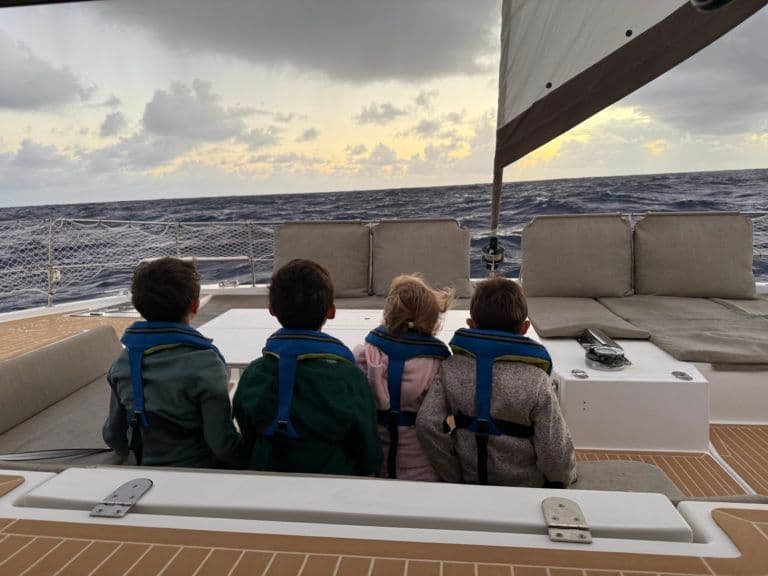
Crossing the Atlantic as a family means stepping into a completely different rhythm. Even before the long days at sea and the approach to the Caribbean, there are the preparations, provisioning, final adjustments, and then the long-awaited day of departure. In this first part of the logbook of Guillaume, Michelle, and their children, we take you through the first days of this transatlantic adventure aboard North Star—filled with excitement, adaptation, wonder, and life at sea.
Day 1 – November 19: THE ADVENTURE IS ABOUT TO BEGIN!
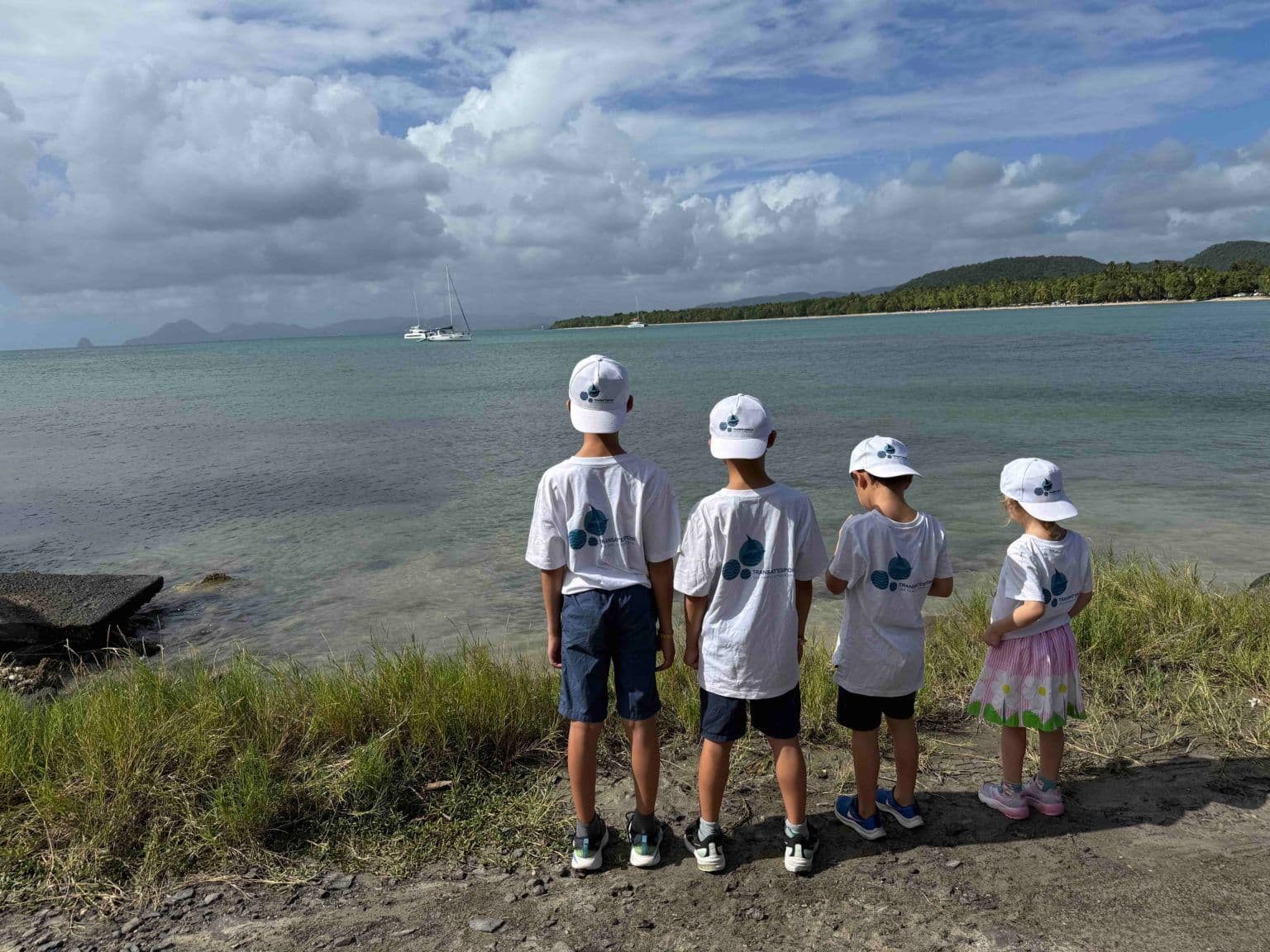
"The whole family is getting ready to embark this weekend for the Transat’espoir. On board: Guillaume & Michèle de Candolle with Albert, Pierre, Roger, and Louise."
Day 2 – November 20: FINAL PREPARATIONS
"A day dedicated to packing. The moment when you realize you may not be able to take everything with you (more than 180 kg of equipment after all).
But it’s all good—we have the essentials: the DFDL Foundation is in our bags and in our hearts! ❤️
And happy birthday to the DFDL Foundation—55 years already… 🥳"
Day 3 – November 21: A CHANGE OF SCENERY
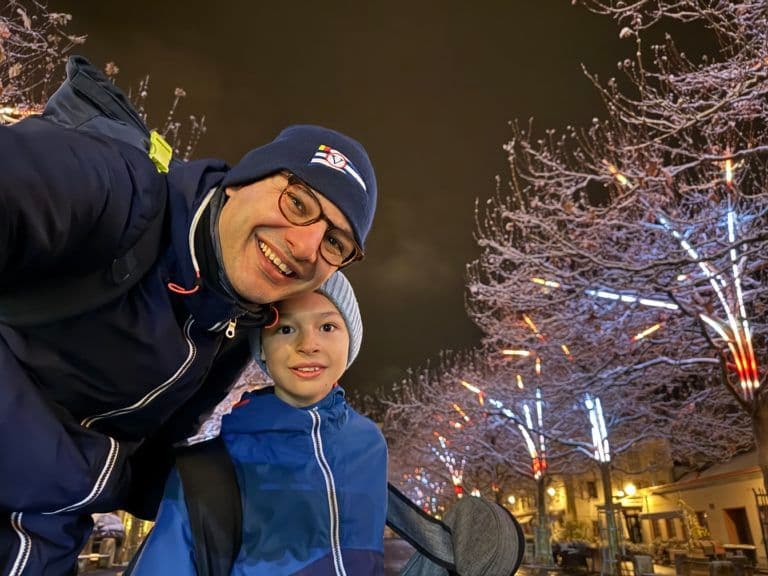
"At four in the morning, it was snowing on the market square in Carouge when we took the bus to the airport with Albert, wrapped in layers of clothing.
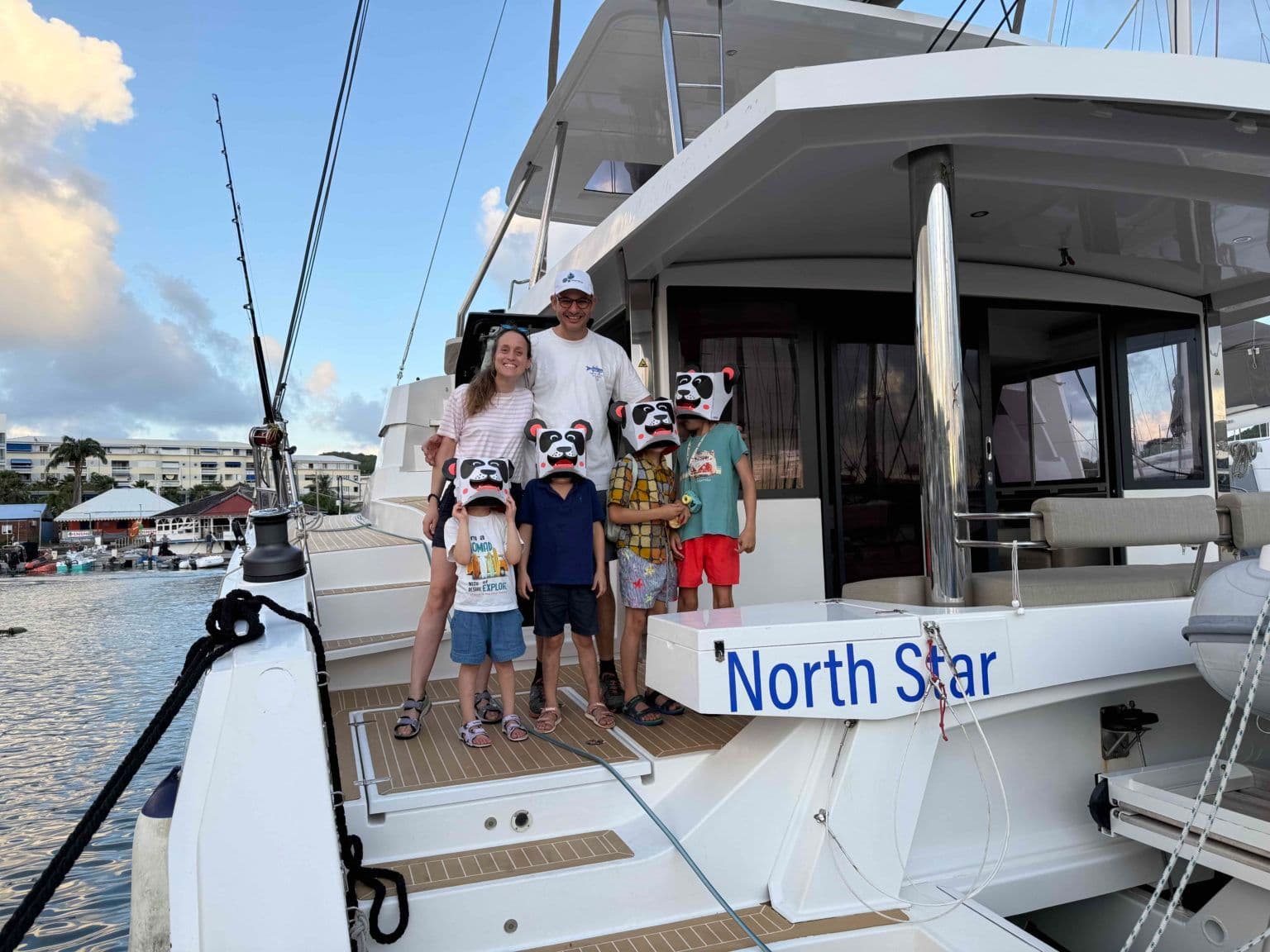
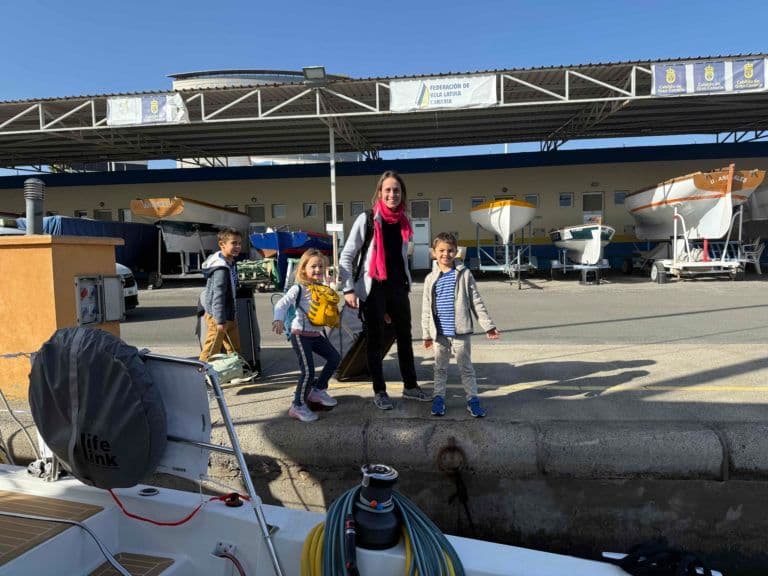
A few hours later, here we are in front of the boat in short sleeves.
Well, that worked out, because otherwise it would have been time to roll up our sleeves!
Boat inspection and familiarization, first round of provisioning (7 giant carts filled to the brim), and the start of settling into this boat that will be our home for the next month."
Day 4 – November 22: PROVISIONING
"More than 500 kg of water and food were loaded onto the boat today. Before that, several hours were spent shopping, based on a file we had been working on for months. Because planning 28 days of meals for six people without forgetting anything is no small task.
The days are long and the nights are short, but what a privilege to live such an adventure. We also hoisted a beautiful Transat’espoir flag up the mast, but the strong wind refused to let it fly properly—the photo will have to wait for another day."
Day 5 – November 23: THE CREW IS COMPLETE
"This morning, Michèle, Pierre, Roger, and Louise arrived in Las Palmas and discovered “NORTH STAR,” the boat that will accompany us on this adventure. Our crew is now complete for the Transat’espoir! 🥳
No time to waste—everyone sets off to say goodbye to all the crews departing for Saint Lucia as part of the ARC rally (special mention to Véronique, Frédéric, and Tanguy, the crew of “LOVITANA,” the former associate of our children’s pediatrician, her husband, and one of their sons).
The children are already making the boat their own (noisily 🤣)…"
📢⚡️ BREAKING NEWS ⚡️: DEPARTURE POSTPONED TO TUESDAY, NOVEMBER 25
"While replacing a part of the watermaker, it turned out that another component was defective and needed to be replaced before departure. The good news is that the new part will be installed Tuesday morning.
They say you must accept what you cannot change, have the courage to change what you can, and the wisdom to know the difference…
This gives us more time to get familiar with “NORTH STAR,” calmly review safety procedures with the children, load a few extra kilos of fruits and vegetables, explore Las Palmas, and most importantly spend more time with our supporters who came here to see us off (thank you, Mom ❤️)…"
Day 6 – November 24: SCHOOL DAY AND DIY PROJECTS
"It may not feel like it, but it’s already Monday, and even at the dock, school must begin on board. Everyone did their part under Michèle’s expert guidance—she ran her classroom brilliantly.
Meanwhile, we had to find various materials to improvise a curtain for one of the cabins and for our evening art project…
While walking along the Las Palmas breakwater the other day, we saw all the paintings on the rocks facing the harbor. A tradition has formed: leaving your mark before crossing the ocean. It looks easy—but it really isn’t… And once we got started, we even made another one in the small nearby harbor where “NORTH STAR” is moored."
Day 7 – November 25: DEPARTURE DAY
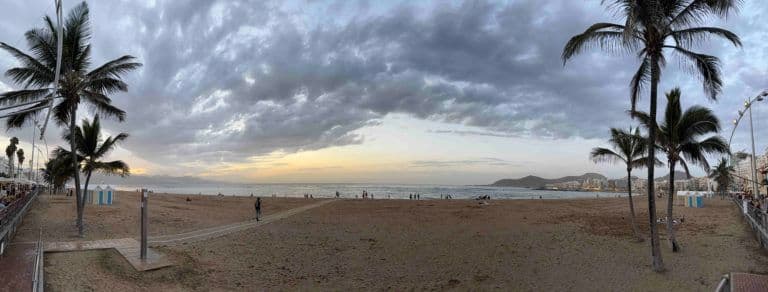
"A busy day filled with a long list of small tasks before departure—but above all, filled with emotion. The watermaker was finally repaired early in the afternoon, and the last fresh supplies were loaded on board. We even managed to get rid of most of the sand the children brought back from yesterday’s beach session.
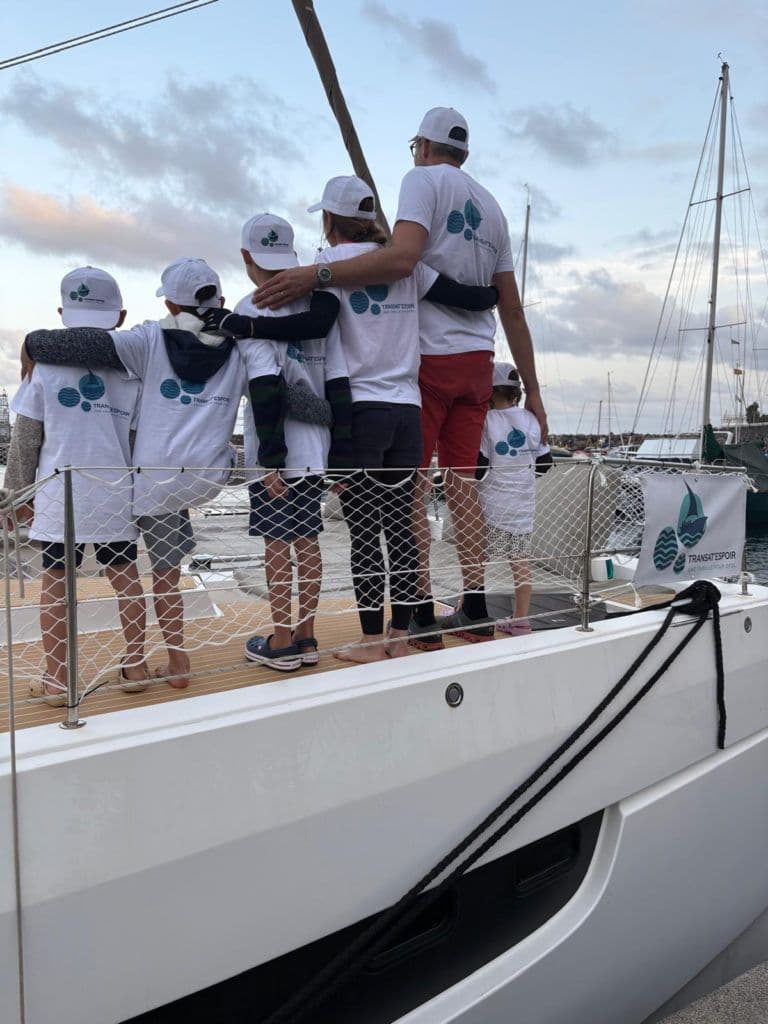
After completing the departure formalities at the marina, we hugged Beatriz and Jean-Paul, who have been in Las Palmas longer than we have and whose help and support have been invaluable since our arrival. One last look toward the open sea—and here comes the moment we had dreamed of, prepared for, and awaited so long… Michèle casts off the last line—heading for the other side of the Atlantic Ocean!"
Day 8 – November 26: LAST LAND BEFORE THE CARIBBEAN
"First wake-up at sea for the whole family on this Transat’espoir. And if you’re wondering about the state of our stomachs… we’ll spare you the details! But yes, seasickness is real with the swell that has followed us since leaving Las Palmas. While Michèle holds strong, Roger seems to be the only one completely unaffected—even experienced sailors can suffer during the first days offshore. Let’s move on so I can finish writing this…
We spotted our first whales today thanks to Michèle scanning the horizon. We also have a small butterfly that has been traveling with us since departure. A touch of emotion as we glimpse the last Canary Island in the distance before the Caribbean in a few weeks…"
Day 9 – November 27: FACING THE IMMENSITY OF THE OCEAN
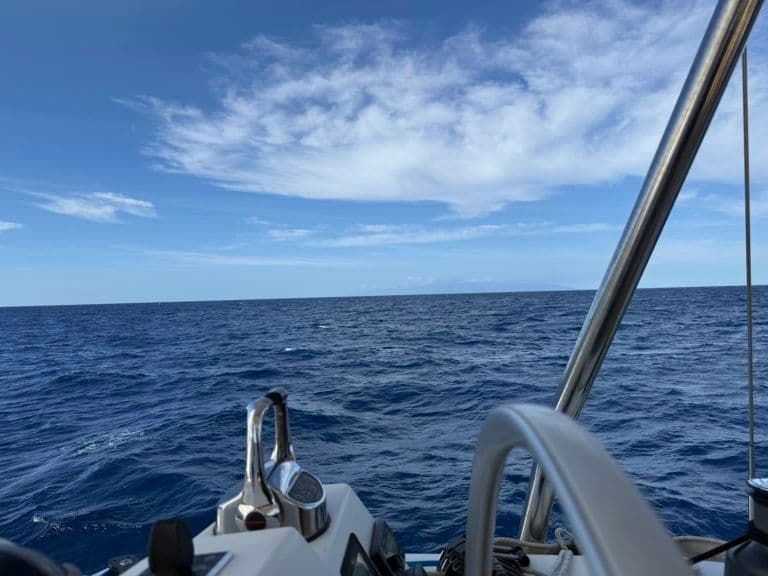
"Today, our stomachs finally started to settle, and real meals were cooked and enjoyed on board—important for morale. Roger pointed out that the sea is round (even though he hasn’t read Jean-François Deniau, as far as I know). He noticed that the horizon curves all around him… From offshore, even a six-year-old can see that the Earth is not flat. It’s amazing how stepping back can reveal the obvious. In daily life, obstacles can seem overwhelming, but a bit of perspective can reveal solutions within reach—just like realizing a dream such as crossing the Atlantic.
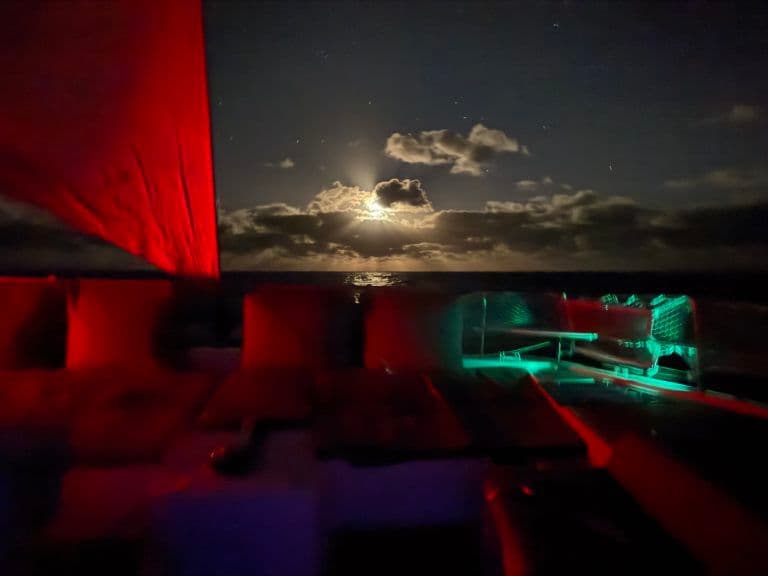
Tonight, under the moonlight, we feel incredibly lucky to share such an adventure as a family."
Day 10 – November 28: RESOURCE MANAGEMENT
"Managing resources is a very current issue—and at sea, it’s a constant concern. Discipline is key when it comes to every liter of water and every amp of electricity. We all have efforts to make, on land as at sea: turning off the tap while brushing our teeth, limiting water use for dishes, switching off unnecessary devices. This discipline echoes that of scientific research, such as the work supported by the Dr Henri Dubois-Ferrière Dinu Lipatti Foundation. There too, every element matters—a data point, a sample, a hypothesis—all carefully used, interpreted, and preserved.
Such precision allows progress in understanding the human body—for example, the influence of biological rhythms on the immune system, a project currently supported by the DFDL Foundation. By donating, you are supporting this careful management of resources. Thank you in advance for your generosity!"
Day 11 – November 29: 500 NAUTICAL MILES PASSED
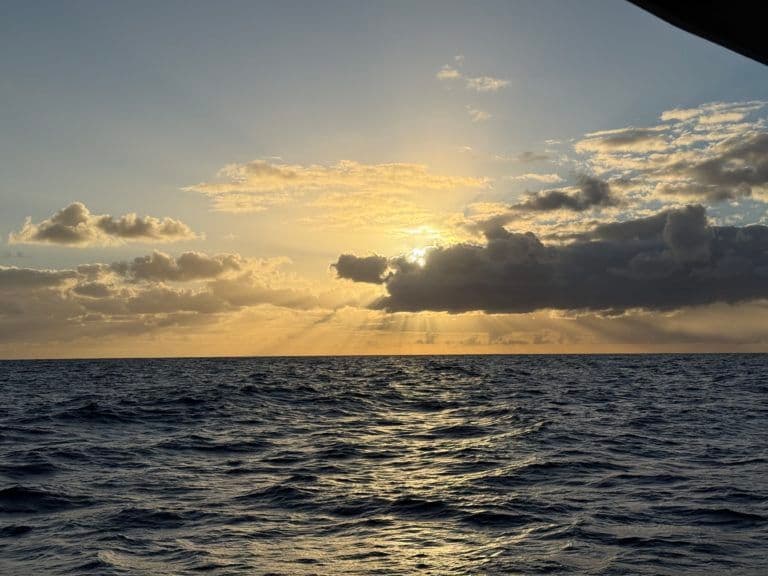
"After a rough night with winds reaching up to 25 knots (just under 50 km/h), we crossed the milestone of the first 500 nautical miles this morning—over 900 kilometers (out of roughly 5,500 km total). The swell, already significant at 1.4 meters yesterday, has risen to 2.4 meters (for those unfamiliar, this is the average height of the highest third of waves—meaning the largest waves reach around 3 meters).
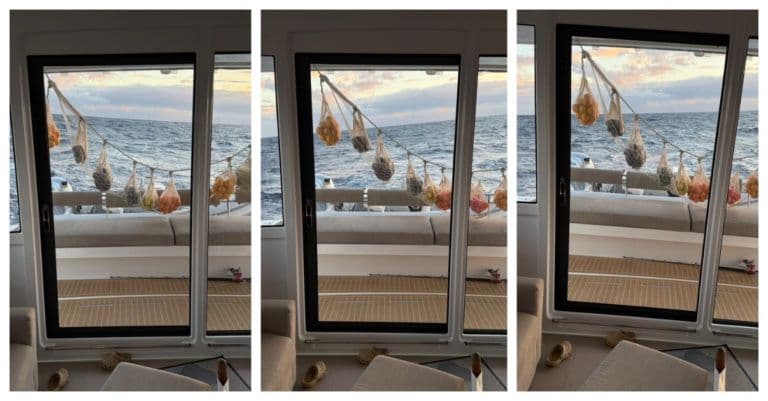
Some of you are wondering what we eat on board… and no, not freeze-dried meals—only fresh food! We didn’t bring all those fruits and vegetables just for decoration at the back of the boat!
For example, we’ve had zucchini pasta gratin, citrus risotto, a revisited Greek salad with homemade rosemary focaccia (well, “boat-made”), banana and orange cake (using fruit that ripens too quickly), quinoa and raw vegetable salad, and more… Food is essential for morale, so we make the most of it!
And you—what are you planning to eat this weekend? On Floatinn, the large catamaran in the harbor, it will be raclette on the lake (thanks to Jean-Luc and Mitsuko, who helped us get familiar with a large catamaran this summer!)."
Day 12 – November 30: SQUALLS, SQUALLS, SQUALLS
"The view from the Transat’espoir is magnificent… Since yesterday, we’ve been sailing in the trade winds—but with squalls added in. What does that mean? No miller in sight—it’s a weather phenomenon at sea involving a sudden increase in wind strength, sometimes accompanied by showers or storms. In practice, we often go from about 18 knots (Beaufort force 3) to 30 knots (force 5), meaning a sudden jump from 33 to 55 km/h.
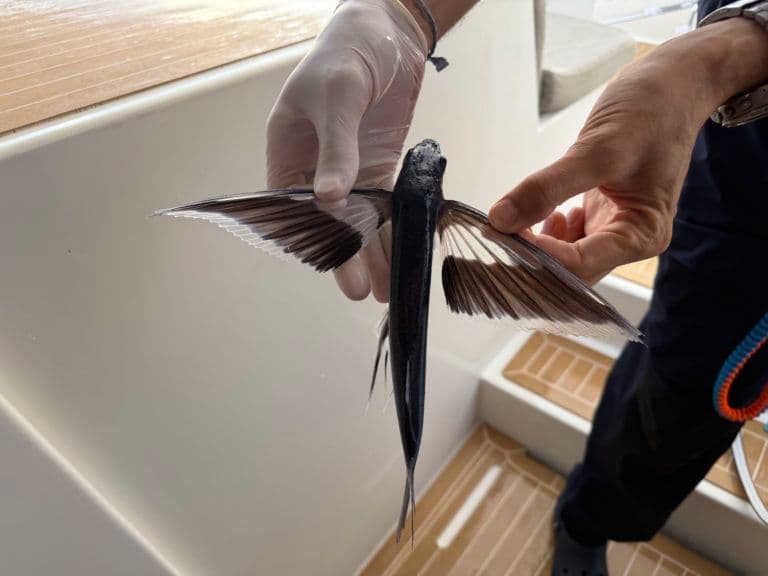
If you watch the horizon carefully, you can sometimes spot dark clouds with rain beneath them approaching. Given the time needed to reduce sail on this boat, anticipation is crucial. Everything is going well, with a bit of onboard DIY—but we’ll tell you more about that another time. For now, we want to share this morning’s surprise on deck… a flying fish. This stowaway, already smelling quite fishy, was politely asked to leave. Fishing with our trolling line hasn’t been very successful so far—our high speed with wave acceleration doesn’t help. But if we get lucky, we’ll be sure to let you know!
In the meantime, we were treated to a beautiful rainbow after a squall this morning. Have a great Sunday!"
Day 13 – December 1: IS A FAMILY TRANSATLANTIC CROSSING REALLY SAFE?
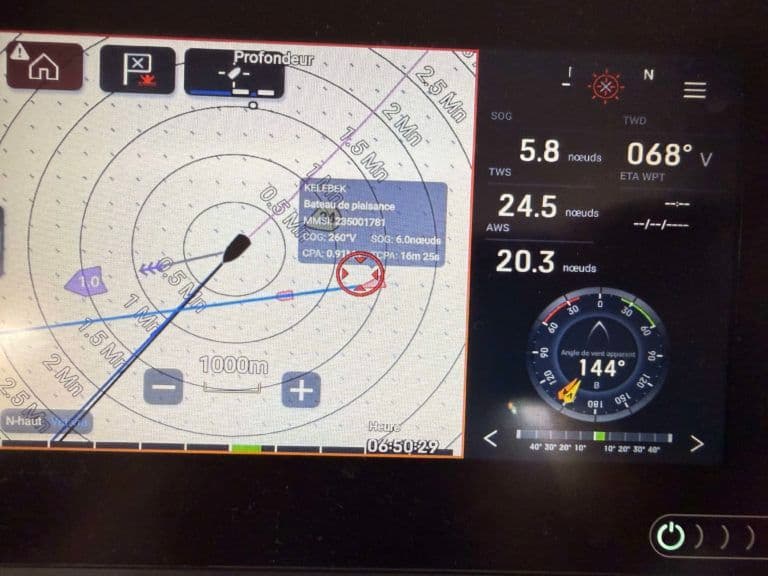
"We hope your week has started well! Ours certainly has—thanks to a radio contact with nearby sailors. It felt great, and it’s always reassuring to know others are around for safety. Safety on board is a daily priority and played a major role in our preparation.
It’s also the question we were most often asked, right after “Are you ready?”
Victor Hugo wrote: “The sea is a space of rigor and freedom. Lose the rigor, and you lose the freedom.”
It’s true—every action, every maneuver must respect safety rules, even when habit might tempt us to relax them.
Safety relies not only on discipline but also on the boat’s design (North Star can carry up to 16 people offshore), onboard equipment (VHF radio, AIS transceiver, EPIRB beacon, radar, liferaft, jacklines, among many others), and personal gear (life jackets, harnesses, AIS MOB beacon, personal PLB, signaling devices, survival knife, and more).
It is also ensured by maritime rescue coordination centers (MRCC), which can be alerted—for example, if our emergency beacon is activated. Did you know that if we triggered our personal beacon registered in Switzerland, it would be REGA that receives the alert as our national MRCC?
I’d like to thank them here—they were the ones who rescued me in the mountains nearly five years ago after I fractured my spine. Safety also comes from rescuers—men and women, many volunteers, who risk their lives to save others. Have you taken a moment to consider that healthcare workers contribute to our safety every day? We are incredibly fortunate to have them.
Supporting medical research is also a way of improving safety for everyone—and that’s exactly what the Foundation does in the field of leukemia and blood diseases. Why not support this cause by opening the first door of your Advent calendar?"
Day 14 – December 2: WHY DON’T WE SAIL IN A STRAIGHT LINE?
"Why don’t we head straight for the Caribbean? No, it’s not because North Star drifts off course when we fall asleep—or when the children take the helm 🤣!
Our route depends on weather conditions: we try to avoid areas with too much wind, too little wind, or violent squalls and storms. Once a theoretical route is chosen, we must convert wind into speed. But a sailboat cannot move directly into the wind, and sailing straight downwind isn’t ideal either—the boom could swing dangerously, and the boat would be slower anyway.
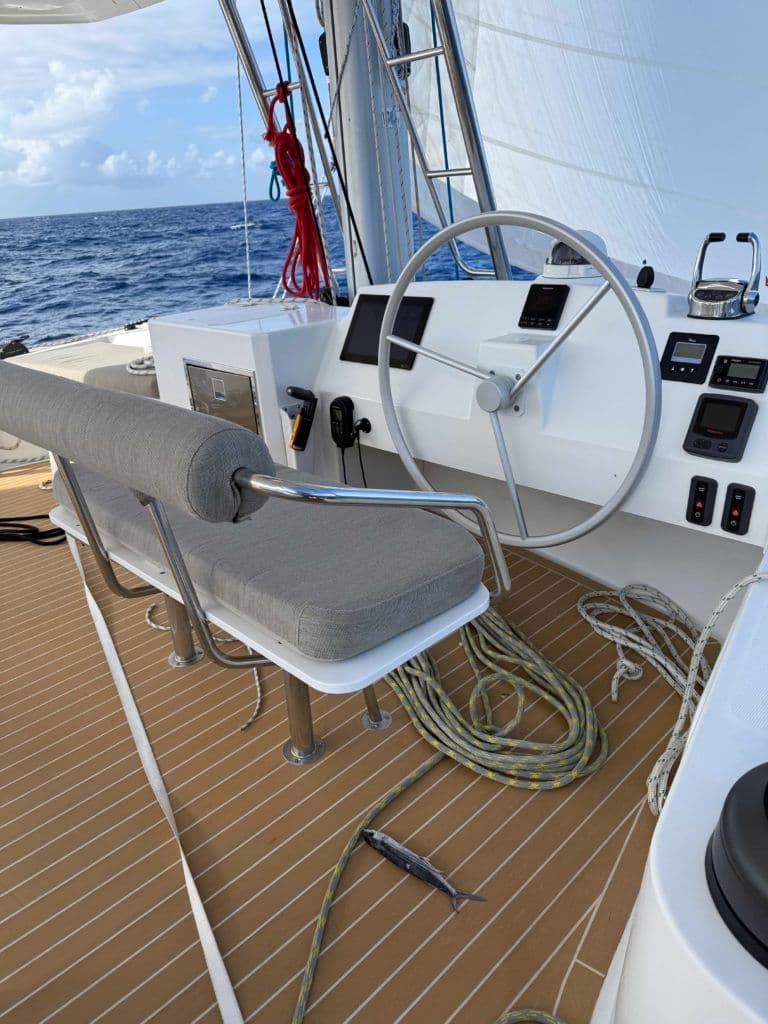
So we move forward in zigzags to make the best use of the wind and stay safe. We also adjust sail size by reefing or shaking out reefs (not veal, of course!). And guess what I found this morning while shaking out a reef? Another stowaway!
To get there, the flying fish must have jumped more than 5 or 6 meters above the water! It eventually returned to the sea along with its three companions discovered on deck by the children.
Meanwhile, their non-flying relatives still refuse to bite our fishing line… But the weather is beautiful—and we hope it is for you too.
📢 TRANSAT’ESPOIR UPDATE – DECEMBER 2 📢
After a slow day due to light trade winds and many maneuvers, we have just passed the symbolic milestone of 1,000 nautical miles! That means we’ve covered more than one third of the distance between the Canary Islands and the Caribbean 🥳
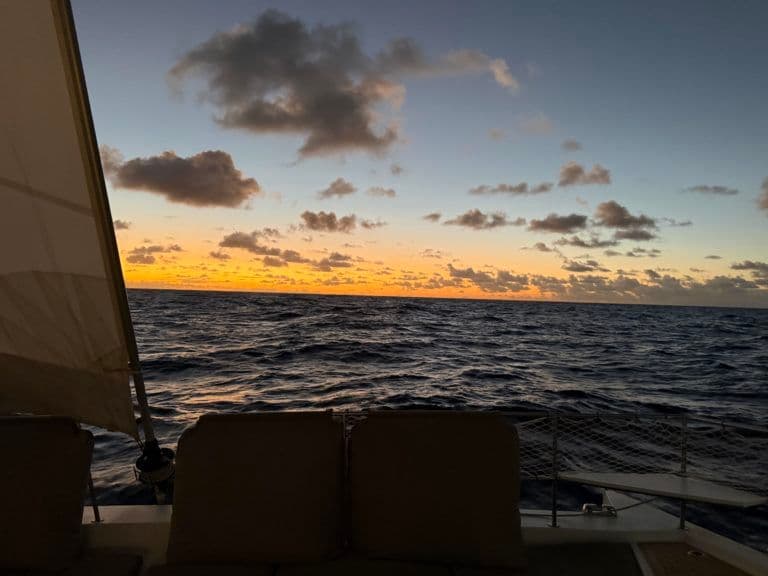
To celebrate, we enjoyed a snack on the flying deck with banana cake made from overripe fruit… And to thank you for your support and encouragement since the start of this journey, here is today’s beautiful sunset—just for you. See you tomorrow for more of the Transat’espoir: one family for DFDL!"
Day 15 – December 3: DO YOU DROP ANCHOR TO SLEEP?
"A very relevant question that many of you asked before our departure. So no—we don’t have 3,000 meters of chain on board (ours weighs over 3 kg per meter—do the math!).
That reminds me of a story from a nautical blooper book: to untangle 120 meters of chain, sailors once decided to drop it all into the sea. It untangled beautifully… until they realized it was impossible to haul it back up, as it hung vertically with the full weight of the chain and anchor. By the way, do you know why in French we say “to wet the anchor” instead of “to drop it”? Because you might need it again 🤣
Jokes aside—you’re probably wondering how we handle nights on board… I take the first watch from 5 p.m. to 3 a.m., and Michèle takes over until 9 a.m., before starting school with the children. Don’t worry—you get used to it after a few days (and nights).
And with the moon’s cooperation, it can be absolutely beautiful. I’ll let you judge from the photo taken during last night’s watch."
Day 16 – December 4: BEAUTIFUL SEA, DIRTY SEA?
"This line by Raymond Grison comes to mind as we write these words. Fishing hasn’t been very successful so far—far from the stories of daily fresh catches we’ve read in old transatlantic logs (though maybe we lack the technique). Michèle did catch something—but plastic… in the middle of the Atlantic.
Encountering pollution so far from land is sobering, especially knowing the damage microplastics cause to marine life. We take this as a reminder of the importance of protecting our planet and oceans. On board, waste management requires careful organization. We sort everything we can and store it on board, except for organic waste, which can be disposed of overboard in accordance with MARPOL regulations.
We’ve realized that when sorting properly, we don’t actually produce that much waste. It seems that in Switzerland, too much organic waste is thrown away instead of composted—a real waste of resources… something to think about."